WorkBlogAboutContact
Say Hello
Topics background

Headless Architecture

Headless WordPress is one of those terms that sounds more complicated than it is — and also, in practice, more complicated than the marketing makes it seem. This category cuts through both.At its simplest, “headless WordPress” means using WordPress as a content management system — where your editors write and publish posts, pages, and custom content types — while completely replacing the WordPress frontend (the theme layer) with a modern JavaScript framework like Next.js, Nuxt, Gatsby, or SvelteKit. Your content lives in WordPress; your presentation layer is a separate application that fetches that content via an API (usually WPGraphQL or the REST API).Why do it? The performance case is real: a well-built headless site will be significantly faster than a traditional WordPress site running a page builder, because you eliminate the PHP render chain and can statically generate pages at build time. You also gain the full power of modern frontend tooling — TypeScript, component libraries, edge deployment, incremental static regeneration.Why not do it? It’s not right for every project. The content editing experience changes (editors lose the visual frontend preview they’re used to with page builders like Elementor). Hosting becomes more complex — you need to host both WordPress and the frontend. Development cost increases. For a brochure site with three pages and one developer, a traditional WordPress theme is often the pragmatic choice.The posts in this category cover the real-world decisions: how to evaluate whether headless is right for your project, how to structure a Next.js + WordPress integration using WPGraphQL, how to handle authentication and draft previews in a decoupled setup, and how to manage the operational complexity of running two separate systems.Everything here comes from direct project experience. JasonB Digital is itself a headless WordPress site — built on Next.js 16 with WPGraphQL and on-demand ISR (Incremental Static Regeneration), which means the architecture being described in these posts is the same architecture running this one.If you’re a developer evaluating the stack, a technical lead trying to brief your team, or a business owner who’s been told “we should go headless” and want to understand what that actually means — you’re in the right place.

1 article

AllHeadless ArchitectureWordPress News
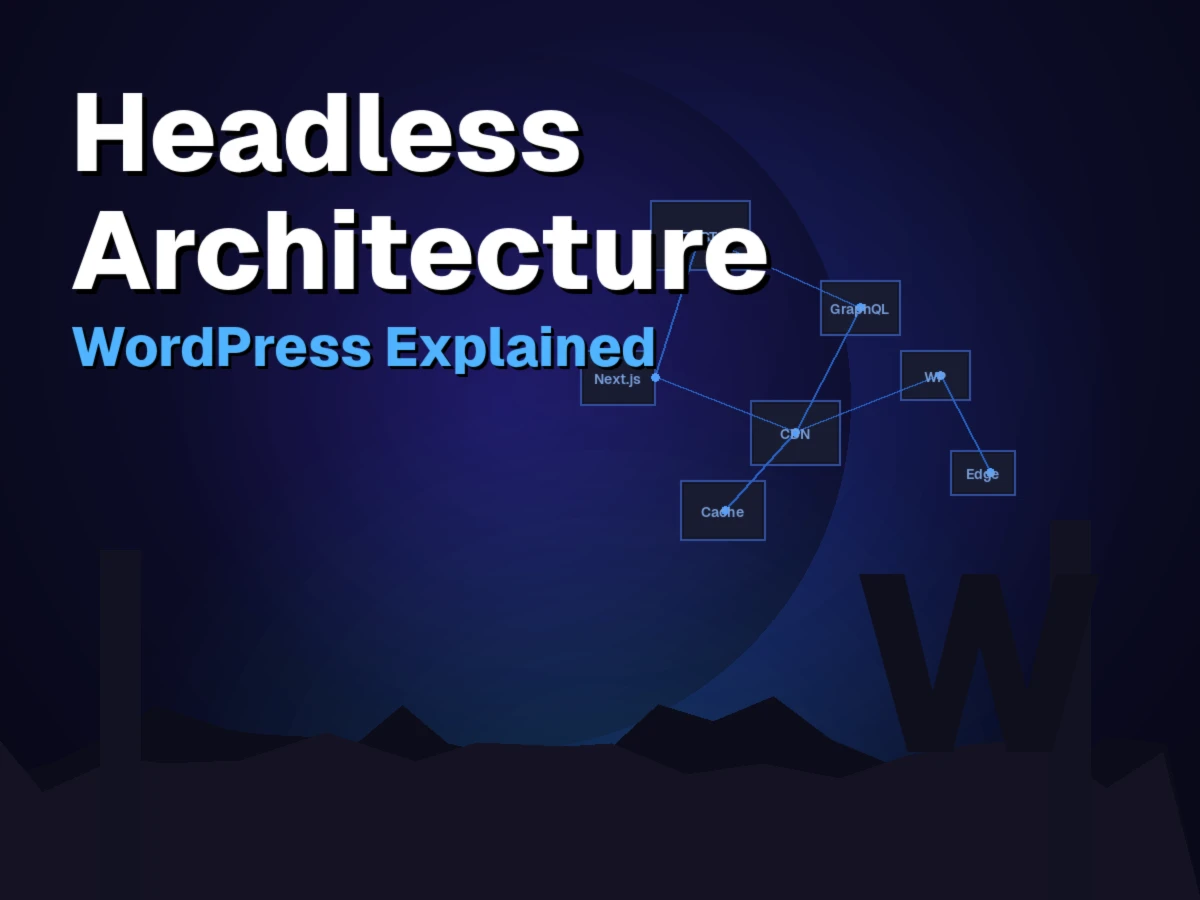
Headless Architecture WordPress Explained - API nodes and architectural blocks on dark blue background

Headless Architecture: WordPress Explained

Aug 25, 2024

Looking for expert help?

I specialize in WordPress development, AI automation, and digital strategy.

Let's talk
AI-powered digital solutions

Services

  • WordPress Consulting
  • AI Automation
  • Marketing & Analytics
  • Custom Solutions
  • Web Design

Resources

  • Blog
  • About
  • Contact

Connect

  • Contact Us
  • LinkedIn
Book a Consultation

© 2026 JBE Works LTD

Privacy PolicyTerms